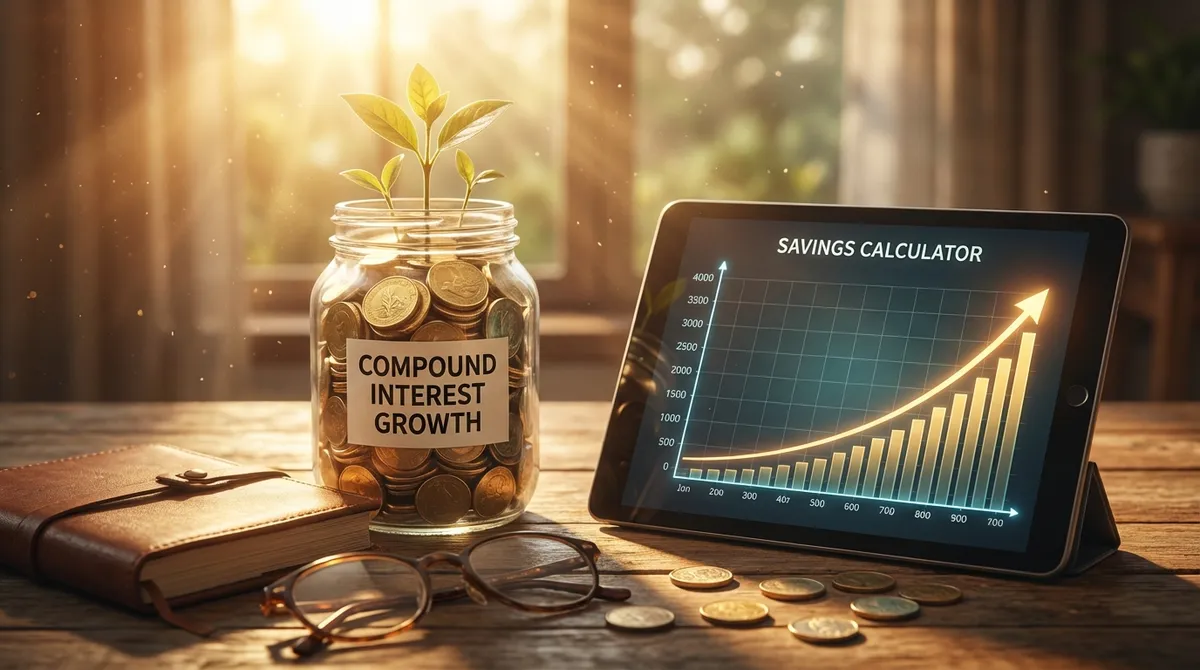
Maximize your savings strategy with our comprehensive CD calculator. Accurately estimate your Certificate of Deposit returns by factoring in principal, term length, and Annual Percentage Yield (APY) to make smarter investment decisions.
How to Use This CD Calculator
Our CD calculator is designed to be intuitive and powerful, giving you a clear picture of your potential earnings. Whether you are a seasoned investor or just starting to save, this tool helps you visualize the growth of your money over time.
- Enter Initial Deposit: Input the total amount of money you plan to invest in the Certificate of Deposit. This is your principal.
- Input APY: Enter the Annual Percentage Yield offered by the bank or credit union. This rate reflects the total amount of interest you will earn in a year, including the effects of compounding.
- Set the Term: Specify the duration of the CD in years and months. Standard terms range from 6 months to 5 years, but you can customize this to match your specific CD.
- Calculate: Click the "Calculate Returns" button to instantly see your total balance at maturity and the total interest earned.
Understanding CD Growth: APY vs. APR
When shopping for CDs, you will often see two different interest rates: APY (Annual Percentage Yield) and APR (Annual Percentage Rate). Understanding the difference is crucial for accurately predicting your returns.
APR is the simple interest rate. It represents the amount of interest you earn on your principal without taking compounding into account. It is the base rate used to calculate your interest payments.
APY, on the other hand, includes the effect of compounding interest. Compounding means you earn interest on your principal plus the interest you've already accumulated. Because CDs typically compound interest (daily, monthly, or quarterly), the APY is almost always higher than the APR. Our calculator uses APY because it provides a more accurate reflection of your actual earnings at the end of the year.
For more detailed information on banking terms and regulations, you can visit the FDIC's guide on CDs.
Factors Affecting Your CD Returns
Several key variables influence how much money you will make from a Certificate of Deposit. Tweaking these numbers in the calculator can help you find the best investment strategy for your goals.
1. Interest Rate (APY)
The most obvious factor is the interest rate. Higher APYs lead to significantly higher returns, especially over long periods. Online banks often offer higher rates than traditional brick-and-mortar banks due to lower overhead costs.
2. Term Length
Generally, longer-term CDs offer higher interest rates. Banks reward you for locking away your money for a longer period. However, you should balance the higher rate with your need for liquidity. If you might need the money sooner, a shorter-term CD or a "CD ladder" strategy might be better.
3. Compounding Frequency
While APY accounts for compounding, the frequency at which interest is compounded (daily, monthly, quarterly) can slightly affect the final amount if you are looking at the raw APR. Most modern CDs quote APY, which standardizes this for easy comparison.
4. Principal Amount
The more you invest, the more you earn. Some "Jumbo CDs" require a high minimum deposit (e.g., $100,000) but may offer premium interest rates in return. Conversely, some banks have no minimum deposit, making them accessible to everyone.
Advanced CD Strategies: Laddering vs. Bullet
To truly maximize your returns while maintaining some liquidity, you can employ advanced strategies. The most popular is the CD Ladder.
Imagine you have $10,000 to invest. Instead of locking it all in a 5-year CD, you split it into five $2,000 portions. You buy a 1-year, 2-year, 3-year, 4-year, and 5-year CD.
- Year 1: Your 1-year CD matures. You take the cash and reinvest it into a new 5-year CD.
- Year 2: Your 2-year CD (now 1 year left) matures. You reinvest it into a new 5-year CD.
- Result: After 5 years, you have a CD maturing every single year, giving you annual access to cash without penalty, while earning the higher interest rates associated with 5-year terms.
The Bullet Strategy is different. You buy multiple CDs with different terms that all mature at the same time. This is perfect for a specific financial goal, like a down payment on a house in 3 years. You would buy a 3-year CD now, a 2-year CD next year, and a 1-year CD the year after. All funds become available exactly when you need them. Use our Investment Calculator to compare this with other investment vehicles.
Tax Implications of CD Interest
It is vital to understand that the IRS treats CD interest as ordinary income. This means it is taxed at your marginal tax rate, just like your wages.
When is it taxed? You are taxed in the year the interest is credited to your account, even if you don't withdraw it. If you have a 5-year CD that pays interest monthly, you owe taxes on that interest every year, not just at maturity.
Tax-Deferred CDs: Some retirement accounts, like IRAs, allow you to hold CDs. In a Traditional IRA, you defer taxes until you withdraw the money in retirement. In a Roth IRA, you pay no taxes on the interest if you follow the withdrawal rules. Check our Salary Calculator to see how your tax bracket might affect your net returns.
Historical Context: Are Rates High or Low?
CD rates fluctuate with the Federal Reserve's federal funds rate. In the early 1980s, CD rates peaked above 15%, a dream for savers but a nightmare for borrowers. In contrast, during the 2010s and early 2020s, rates were near historic lows, often under 1%.
Currently, we are in a period of relatively higher rates compared to the last decade. This makes CDs an attractive option for risk-averse investors looking to beat inflation. However, if inflation is 4% and your CD pays 3%, your real return is negative. Always consider the "Real Rate of Return" (Nominal Rate - Inflation Rate).
CDs vs. Other Low-Risk Investments
How does a CD stack up against other safe harbors for your cash?
- Money Market Accounts (MMAs): Similar to savings accounts but often come with check-writing privileges and higher minimum balances. Rates are variable, unlike fixed-rate CDs.
- Treasury Bills (T-Bills): Short-term debt securities issued by the U.S. government. They are exempt from state and local taxes, which can give them an edge over CDs in high-tax states.
- Bonds: Corporate or municipal bonds can pay higher yields but carry more risk. If interest rates rise, bond prices fall, which can result in capital losses if you sell early.
For a broader view of your financial health, consider using our Business Loan Calculator if you are leveraging assets for business growth, or simply stick to the Savings Calculator for more liquid emergency funds.
Strategies to Maximize CD Earnings
Investing in CDs is a low-risk strategy, but there are ways to optimize your returns beyond just picking the highest rate.
- CD Laddering: Instead of putting all your money into one 5-year CD, split it into five parts and invest in 1, 2, 3, 4, and 5-year CDs. As each matures, reinvest it into a new 5-year CD. This gives you regular access to cash while capturing long-term rates.
- Shop Around: Rates vary wildly between institutions. Don't just stick with your current bank; compare offers from credit unions and online banks.
- Watch for Penalties: Ensure you understand the early withdrawal penalties. If you withdraw funds before the term ends, you could lose some or all of the interest earned.