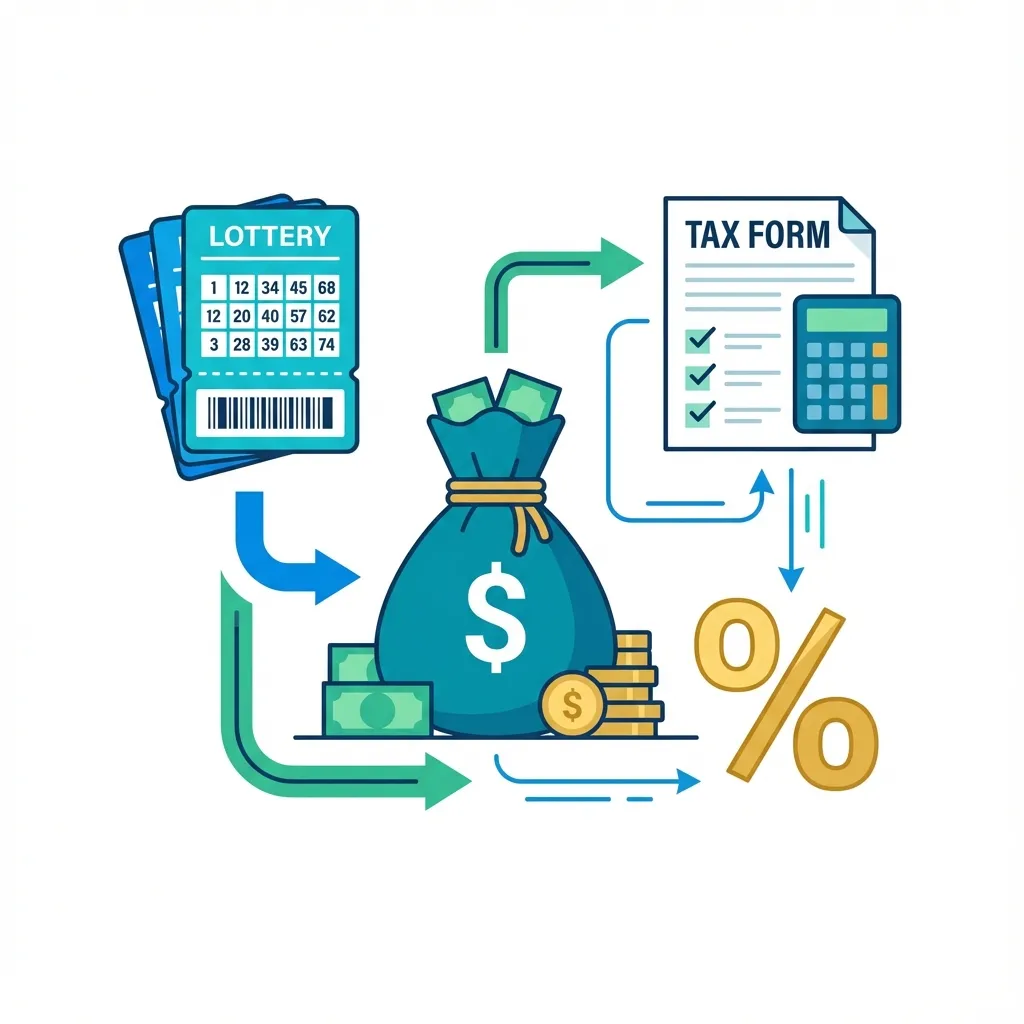
Lottery Tax Calculator: What You Actually Keep
Whether it is Powerball, Mega Millions, or a state-specific scratch-off, winning the lottery is the dream of a lifetime. However, the reality of lottery "winnings" is heavily tempered by the reality of lottery "taxes."
Our Lottery Tax Calculator is designed to cut through the fantasy and give you the cold, hard number: the amount that actually hits your bank account. By accounting for the different payout structures and the complex web of federal and state taxes, we provide a realistic picture of your new financial status.
Powerball vs. Mega Millions vs. State Lotteries
Not all lotteries are created equal. While the tax treatment is generally the same (income is income), the payout structures differ.
Powerball
- Annuity: 30 graduated payments over 29 years. Increases by 5% annually.
- Cash Option: Typically lower percentage of the jackpot than Mega Millions due to different bond durations.
Mega Millions
- Annuity: Also 30 graduated payments, 5% annual increase.
- Cash Option: Often slightly higher cash value ratio than Powerball.
State Lotteries / Scratch-Offs
- Lump Sum Only: Many smaller prizes (e.g., $1 million) are often paid only as lump sums, though some offer "life" annuities (e.g., "$1,000 a week for life").
- Fixed Taxes: Unlike the variable jackpots, fixed prizes (like $1M for 5 numbers) are easier to calculate but still suffer the same tax fate.
The Truth About Federal Withholding
The most common surprise for new winners is the "Tax Gap."
The IRS requires the lottery commission to withhold 24% of any prize over $5,000. For a $100 million cash prize, that is $24 million taken out before you even touch the check.
HOWEVER, you owe federal income tax at the top marginal rate, which is 37%. This means you owe an additional 13% ($13 million in this example) when you file your taxes the following April.
State Tax Breakdown
Where you buy the ticket determines your state tax liability. This can create "Lottery Tourism" where people cross borders to buy tickets in tax-friendly states.
The "Zero Tax" States
These states do not tax lottery winnings (though you still owe Federal tax):
- California (Lottery specifically exempt!)
- Florida
- New Hampshire
- South Dakota
- Tennessee
- Texas
- Washington
- Wyoming
Note: Puerto Rico operates uniquely with a special 20% tax and is exempt from US Federal tax in many cases.
The High Tax States
Winning in these states sucks a significant portion of your prize:
- New York: 8.82% State + 3.876% NYC City Tax = ~12.7% total local tax.
- New Jersey: Up to 10.75%
- Oregon: ~9.9%
- Maryland: ~8.95%
On a $100 million prize, the difference between buying in Florida vs. New York City is nearly $13 million in extra taxes.
Lump Sum vs. Annuity: A Strategic Choice
We cover this extensively in our payout calculators, but from a strictly tax perspective, the choice is interesting.
Lump Sum Risks: You lock in current tax rates. If Congress raises the top tax bracket to 50% next year, you don't care—you already paid your 37%.
Annuity Risks: You are betting on future tax rates. If tax rates go down, your future payments are worth more. If tax rates go up, you lose more. Given currently historically low tax rates, many advisors fear rates have nowhere to go but up, making the annuity risky from a tax planning standpoint.
Claiming Trusts and Anonymity
Aside from taxes, physical safety is a priority. "Claiming Trusts" are legal entities set up to claim the prize on your behalf.
- Blind Trusts: The trustee claims the prize. The beneficiary (you) is unknown to the public.
- LLCs: A Limited Liability Company can claim the prize in many states.
However, only a handful of states (DE, KS, MD, ND, OH, SC, TX, WY) allow true anonymity. In others, the "Right to Know" laws force the disclosure of the ultimate beneficiary, meaning the press will eventually find your name even with a trust.
Strategies to Minimize Taxes
You have won. The tax bill is huge. Can you lower it?
1. Charitable Donations
You can deduct charitable contributions up to 60% of your Adjusted Gross Income (AGI). By donating a portion of your winnings to a charity or setting up a private foundation, you can significantly reduce your tax bill while doing good.
2. Gambling Losses
You can deduct gambling losses up to the amount of your winnings. Did you spend $5,000 on losing tickets this year? You can deduct that $5,000 against your jackpot. (Keep your receipts!)
3. Gifting
While gifting doesn't lower your income tax, it reduces your taxable estate. Moving money out of your name and into heirs' hands quickly (using the lifetime gift exemption) protects it from the 40% estate tax upon your death.
What about Office Pools?
Winning as a group complicates things.
Do NOT have one person claim the prize and then split it. The IRS will view that as one person winning and then gifting money to others, triggering massive gift taxes.
DO create a legal partnership or binding agreement. The lottery commission will cut separate checks (and issue separate W-2Gs) to each member of the group, ensuring everyone pays only their fair share of taxes.
Common Mistakes Lottery Winners Make
Studies show that approximately 70% of lottery winners end up broke within a few years. Understanding these common pitfalls can help you avoid them if fortune ever smiles on you.
1. Immediate Lifestyle Inflation
The moment the check clears, many winners buy mansions, luxury cars, and boats. The problem is that these assets come with massive ongoing costs: property taxes, insurance, maintenance, and staff. A $5 million house might cost $100,000+ per year just to maintain. Without a steady income stream, these fixed costs drain your principal rapidly.
2. Trusting the Wrong People
Long-lost relatives, childhood friends, and "financial advisors" with questionable credentials will appear with compelling investment opportunities. Many winners have lost millions to fraud, Ponzi schemes, and bad investments pitched by people they trusted. Always verify credentials and work only with fee-only fiduciary advisors who are legally required to act in your best interest.
3. Ignoring Estate Planning
Without proper estate planning, a significant portion of your winnings could go to taxes when you die. The federal estate tax rate is 40% on amounts above the exemption threshold. Setting up trusts, gifting strategies, and insurance policies can protect your heirs from a devastating tax bill.
4. Not Setting Boundaries
The inability to say "no" to friends and family destroys many winners. Consider setting up a separate "giving fund" with a fixed annual budget for helping others. Once it's depleted for the year, you have a legitimate reason to decline additional requests without damaging relationships.
Long-Term Financial Planning
Whether you choose the lump sum or annuity, you need a comprehensive financial plan that extends beyond simply investing the money. Here are key components every lottery winner should consider:
- Emergency Fund: Keep 6-12 months of living expenses in easily accessible accounts, separate from your investment portfolio.
- Insurance Review: Update your life insurance, umbrella liability insurance (essential for the wealthy), and consider long-term care insurance.
- Tax Planning: Work with a CPA year-round, not just at tax time. Quarterly estimated payments, charitable giving strategies, and investment tax-loss harvesting can save you millions over time.
- Succession Planning: Document your wishes for how your wealth should be managed and distributed. Update beneficiary designations on all accounts.
Frequently Asked Questions
Related Tools
Here are other tools to help you manage your financial future:
- Mega Millions Calculator - Specifics for the Mega MIllions game.
- Federal Tax Calculator - Understand the taxes on sharing your wealth.
- Tax Deduction Calculator - Estimate your total deductions.