Calculating the correct postage for your mail is essential to ensure it arrives at its destination without delay or being returned for insufficient funds. Whether you are sending a standard letter, a large envelope (flat), or a package, the United States Postal Service (USPS) has specific rates based on weight, size, and shape. As of July 2024, the cost of a First-Class Mail Forever stamp is $0.73, but rates for other mail types vary significantly. This USPS postage calculator helps you instantly determine the cost for stamps, flats, and parcels, ensuring you never overpay or underpay for shipping.
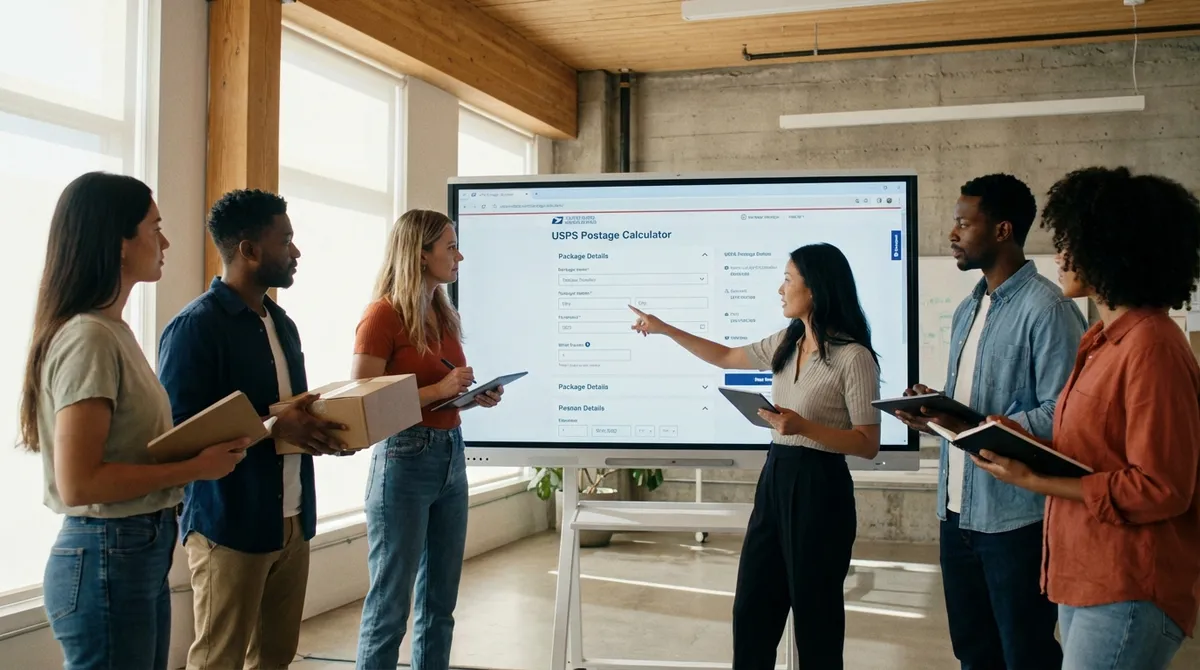
Comprehensive Guide to 2024 and 2025 USPS Postage Rates
Navigating the United States Postal Service (USPS) rate charts can be complex. With price adjustments typically occurring twice a year—in January and July—staying current is vital for both individuals and businesses. The July 2024 rate hike saw the price of a standard Forever Stamp rise to $0.73, a 5-cent increase from the previous rate. This adjustment is part of the "Delivering for America" 10-year plan, aimed at achieving financial sustainability for the postal service.
Understanding these rates isn't just about knowing the price of a stamp; it's about understanding how weight, shape, and destination (zones) interact to determine the final cost. For instance, while a 1-ounce letter costs $0.73, a 2-ounce letter doesn't cost double—it costs $1.01 because the additional ounce rate is significantly lower ($0.28). Knowing these nuances can save you substantial amounts over time, especially if you mail frequently.
Why Do Rates Change?
USPS rates are tied to the Consumer Price Index (CPI) and operate under a "price cap" system for Market Dominant products (like First-Class Mail). However, the Postal Regulatory Commission can approve rates above inflation to compensate for declining mail volume and retirement obligations. This means mailers should expect regular, incremental increases for the foreseeable future.
Detailed Breakdown: Letters, Flats, and Parcels
The USPS categorizes mail into three primary physical types: Letters, Large Envelopes (Flats), and Parcels (Packages). The distinction is rigid, and failing to meet the criteria for one category will bump your item to the next, more expensive tier.
1. First-Class Mail Letters
A "letter" is not just anything you put in an envelope. It must meet specific aspect ratios and flexibility standards.
- Dimensions: Min: 3.5" x 5" x 0.007". Max: 6.125" x 11.5" x 0.25".
- Weight: Maximum 3.5 ounces.
- Aspect Ratio: Length divided by height must be between 1.3 and 2.5.
Cost Structure:
The first ounce is $0.73. Each additional ounce is $0.28.
Example: A 3-ounce letter costs $0.73 + $0.28 + $0.28 = $1.29.
The "Non-Machinable" Surcharge:
If your letter is square, rigid (contains a gift card), has a clasp, or uneven thickness, it cannot be processed by high-speed sorting machines. This incurs a non-machinable surcharge of $0.44. So, a 1-ounce square wedding invitation would cost $0.73 + $0.44 = $1.17.
2. Large Envelopes (Flats)
Large envelopes are designed for documents that shouldn't be folded, like certificates, legal contracts, or manuscripts.
- Dimensions: Must exceed letter dimensions OR be up to 12" x 15" x 0.75".
- Weight: Maximum 13 ounces.
- Flexibility: MUST be flexible. If it's rigid, it's a package.
- Uniform Thickness: Must is uniformly thick. Variations > 1/4 inch classify it as a parcel.
Cost Structure:
Starts much higher than letters at $1.39 for the first ounce. Additional ounces are still $0.28.
Tip: Just because you use a 9x12 envelope doesn't mean you have to pay the flat rate. If you fold the contents to fit in a #10 business envelope, you pay the letter rate ($0.73), saving nearly 50%.
3. Packages (Parcels)
Everything else falls into this category. If it's over 13 ounces (for First-Class Mail), or over 0.75 inches thick, or rigid, it's a package.
USPS Ground Advantage:
Replacing First-Class Package Service, this is the standard affordable option for items under 1 lb (up to 15.999 oz) and offers 2-5 day delivery. Pricing is zone-based, meaning shipping to a neighbor is cheaper than shipping across the country.
Stamps vs. Metered Mail: A Hidden Discount
Did you know you pay a premium for using physical stamps? The "retail" rate for a stamp is $0.73. However, if you use a postage meter or an online postage provider (like Stamps.com, Pitney Bowes, or eBay labels), you pay the "metered" rate, which is currently $0.69.
Savings Calculation:
Saving 4 cents might seem trivial, but for a small business sending 500 invoices a month, that's $20 a month or $240 a year in pure savings. Additionally, online systems prevent over-postage (guessing and putting two stamps on instead of one calculated one), further increasing efficiency.
The Postcard Advantage
Don't forget the humble postcard. For marketing or short messages, postcards offer significant savings.
- Rate: $0.56 per card.
- Dimensions: Min: 3.5" x 5". Max: 4.25" x 6". Thickness: 0.007" to 0.016".
- Strategy: If you design a marketing mailer that is 6" x 9", it classifies as a letter ($0.73), not a postcard. By shaving off a few inches to fit the 4.25" x 6" limit, you save 17 cents per piece—a 23% reduction in cost.
Understanding Extra Services: Certified, Insurance, and More
Sometimes a stamp isn't enough. You need proof of delivery or protection against loss. These "Extra Services" are add-ons to the base postage.
- Certified Mail ($4.40): Provides a tracking number and proof of mailing. Crucial for legal documents or tax returns. It does not provide insurance.
- Return Receipt ($3.65 for hard copy): The famous "Green Card" that gets signed and mailed back to you. Electronic signatures are cheaper ($2.32) and faster.
- Insurance: First-Class Mail letters are not insured by default. You can purchase insurance starting at roughly $2.75 for up to $50 coverage. Ground Advantage packages come with $100 built-in.
Note: Using Certified Mail + Return Receipt adds $8.05 to your $0.73 letter, turning a cheap mailing into an $8.78 expense. Use it only when legally necessary.
The Trap of Odd-Shaped Mail
Have you ever tried to mail a house key, a pen, or a USB drive in a standard envelope? This is a common mistake.
Standard envelopes go through rollers that bend the mail at high speeds. A rigid item like a key will either jam the machine (destroying your letter) or be ripped out of the paper.
The Solution:
- Use the "Non-Machinable" Surcharge ($0.44): Hand-cancel the letter so it bypasses the rollers.
- Use a Padded Envelope: This automatically bumps it to "Package" status (approx $4-$6 depending on zone), but ensures safe delivery with tracking.
Bulk Mail: The Next Level for Businesses
If you are mailing more than 200 pieces at a time (e.g., newsletters, flyers), you enter the world of Commercial Mail (Standard Mail / Marketing Mail).
Pros: Rates can drop to as low as $0.36 per piece.
Cons: Requires an annual permit ($310), complex presorting (grouping by zip code), and stricter address hygiene rules.
For many small businesses, the complexity isn't worth it until you hit volumes of 500-1000 pieces per mailing. Until then, sticking to Metered First-Class Mail is often the sweet spot of improved cost without the administrative headache.
International Postage: Sending Mail Abroad
The Global Forever Stamp simplifies sending international letters. For $1.65, you can send a standard 1-ounce letter or postcard to any country where USPS service is available.
Important Considerations:
1. Weight Limits: The $1.65 covers ONLY the first ounce. Heavier letters require significantly more postage based on "Country Price Groups."
2. Non-Machinable: The same rules apply. Square international envelopes need extra postage.
3. Customs: Letters containing only documents generally don't need customs forms. However, if you send merchandise (even a small trinket in an envelope), it classifies as a package and requires a customs declaration and higher package rates.
Money-Saving Tips for Smart Shippers
1. Invest in a Scale:
Guessing weight is the #1 cause of wasted postage. A $15 digital scale can pay for itself in weeks by stopping you from "playing it safe" with extra stamps.
2. Use "Forever" Stamps as an Investment:
Forever Stamps are valid... forever. If you know a rate hike is coming in July, buy bulk rolls in June. You lock in the lower rate permanently.
3. Compare Carriers for Heavy Items:
USPS is generally the unbeatable king for items under 2 lbs. However, broadly speaking, for boxes over 3-5 lbs, UPS and FedEx often offer competitive or superior ground rates, especially for businesses with negotiated contracts.
Related Tools
Optimize your shipping strategy with our other free calculators:
- USPS Shipping Calculator - Calculate rates for all zones and services.
- USPS Delivery Time Calculator - Estimate arrival dates.
- USPS Tracking - Check package status.
Frequently Asked Questions (FAQ)
External Resources
For official postage rates and regulation updates: