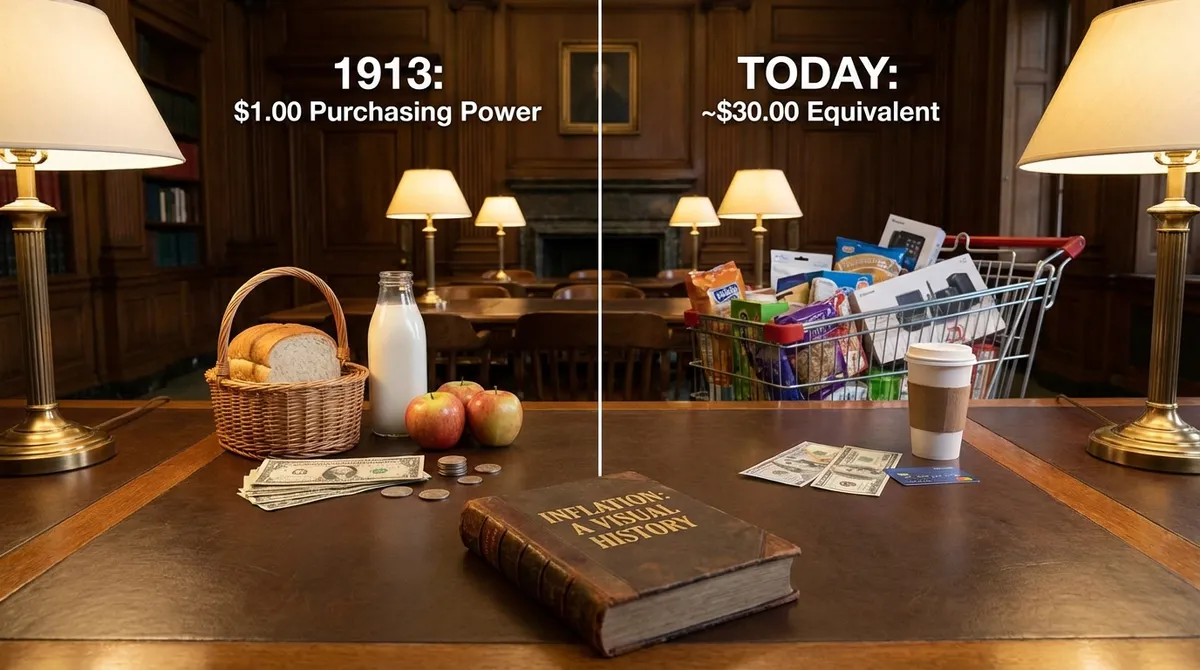
Have you ever wondered why a dollar today buys less than it did when you were a child? Or why your grandparents talk about buying a movie ticket for a nickel? The answer lies in inflation, the silent force that erodes purchasing power over time. Our Inflation Calculator — CPI-based Past vs Present Value is a powerful tool designed to help you understand this economic phenomenon by comparing the value of money across different years. By using historical Consumer Price Index (CPI) data from the Bureau of Labor Statistics, this calculator provides accurate, data-driven insights into how prices have changed from 1913 to the present day.

How to Use the Inflation Calculator
Using our inflation calculator is straightforward and requires no financial expertise. Whether you are a student researching economic history, a retiree planning your budget, or simply curious about the changing value of the dollar, this tool delivers instant results. Here is a step-by-step guide to getting the most out of it:
- Enter the Amount: Start by typing the monetary value you want to adjust. This could be the price of a house, a salary, or the cost of a gallon of milk.
- Select the Start Year: Choose the year that the amount is from. Our data goes back to 1913, the year the CPI was first published.
- Select the End Year: Choose the target year you want to compare against. This is typically the current year, but you can compare any two years in our dataset.
- Calculate: Click the "Calculate Value" button. The tool will instantly compute the adjusted value, the cumulative inflation rate, and the price difference.
Understanding the Consumer Price Index (CPI)
The Consumer Price Index (CPI) is the backbone of inflation calculations in the United States. It is more than just a number; it is a comprehensive measure of the average change over time in the prices paid by urban consumers for a market basket of consumer goods and services. Understanding the CPI is essential for interpreting the results of any inflation calculator.
The Bureau of Labor Statistics (BLS) compiles the CPI by tracking the prices of thousands of items across the country. These items are grouped into categories such as food, housing, apparel, transportation, medical care, recreation, education, and communication. By monitoring these prices month over month and year over year, the BLS can estimate the rate of inflation experienced by the average American household.
There are different variations of the CPI, but the most common one used for general inflation calculations is the CPI-U (Consumer Price Index for All Urban Consumers). This index covers approximately 93% of the total U.S. population and provides the most widely accepted measure of inflation. Our calculator uses the annual average CPI-U data to ensure consistency and accuracy in your historical comparisons.
The Basket of Goods: What Tracks Inflation?
The CPI is based on a "basket of goods" that represents what a typical urban consumer purchases. This basket is not static; it evolves as consumer habits change. For instance, in the 1950s, the basket might have included record players and tobacco, while today it includes smartphones and streaming subscriptions.
The BLS categorizes this basket into eight major groups, weighted by importance:
- Food and Beverages: Breakfast cereal, milk, coffee, chicken, wine, full service meals, and snacks.
- Housing: Rent of primary residence, owners' equivalent rent, fuel oil, and bedroom furniture. This is the largest component, often determining the direction of the headline inflation number.
- Apparel: Men's shirts and sweaters, women's dresses, and jewelry.
- Transportation: New vehicles, airline fares, gasoline, and motor vehicle insurance.
- Medical Care: Prescription drugs, medical supplies, physicians' services, and hospital services.
- Recreation: Televisions, cable television, pets and pet products, sports equipment, and admissions.
- Education and Communication: College tuition, postage, telephone services, and computer software.
- Other Goods and Services: Tobacco and smoking products, haircuts and other personal services, and funeral expenses.
The Impact of Inflation on Purchasing Power
Inflation is often described as "too much money chasing too few goods," but its impact on your daily life is much more tangible. It represents the rate at which the general level of prices for goods and services is rising, and, subsequently, purchasing power is falling.
Erosion of Savings
One of the most significant effects of inflation is the erosion of savings. If you keep your money in a standard savings account with an interest rate lower than the inflation rate, the real value of your savings decreases over time. For example, if inflation is 3% and your savings account earns 1%, you are effectively losing 2% of your purchasing power every year. This highlights the importance of investing in assets that can outpace inflation, such as stocks, real estate, or inflation-protected securities.
Cost of Living Adjustments
Inflation also plays a critical role in salary negotiations and social security benefits. Cost of Living Adjustments (COLAs) are often tied to the CPI to ensure that income keeps pace with rising prices. If your salary remains static while inflation rises, your standard of living will inevitably decline. Use our Pay Raise Calculator to see if your recent raise beat inflation.
Historical Context
Looking back at historical data provides fascinating insights. For instance, $100 in 1913 had the same purchasing power as over $3,000 today. This drastic change illustrates the long-term effects of compounding inflation. While year-over-year inflation might seem small (typically 2-3%), over decades, it fundamentally alters the economic landscape.
Deflation: The Opposite of Inflation
While inflation is the norm in modern economies, it is not the only possibility. Deflation is a decrease in the general price level of goods and services. It occurs when the inflation rate falls below 0%.
Deflation might sound good for consumers—cheaper goods!—but it can be devastating for an economy. It often signals a recession or depression. When prices fall, consumers delay purchases in anticipation of even lower prices, leading to reduced demand, lower production, and higher unemployment. The Great Depression of the 1930s is the most famous example of a deflationary spiral in U.S. history. Our calculator can also demonstrate deflation; simply compare a year with a high CPI to a subsequent year with a lower CPI (e.g., 1929 to 1933).
Limitations of the CPI Inflation Calculator
While our calculator provides a highly accurate estimate of general inflation, it is important to understand its limitations. The CPI represents an average market basket, which may not reflect your personal spending habits.
- Regional Differences: Prices vary significantly by location. Housing in San Francisco has inflated much faster than housing in rural Kansas. The national CPI averages these out.
- Personal Consumption: If you spend a large portion of your income on healthcare or education—sectors that have seen higher-than-average inflation—your personal inflation rate will be higher than the CPI.
- Technology Changes: The CPI struggles to account for quality improvements. A smartphone today costs more than a phone in 1990, but it does infinitely more. The "price" has gone up, but so has the value.
For more specific calculations, consider exploring our CPI Calculator, Investment Calculator, or Future Value Calculator to project future wealth.
Frequently Asked Questions
Conclusion
Inflation is an undeniable force in our economic lives. By using the Inflation Calculator — CPI-based Past vs Present Value, you gain a clearer perspective on how the value of money shifts over time. Whether you are analyzing historical prices, negotiating a salary, or planning for retirement, understanding the real purchasing power of your money is the first step toward financial literacy and security.
Don't let inflation catch you off guard. Use this tool to stay informed, and explore our other financial calculators to build a robust financial plan for the future.