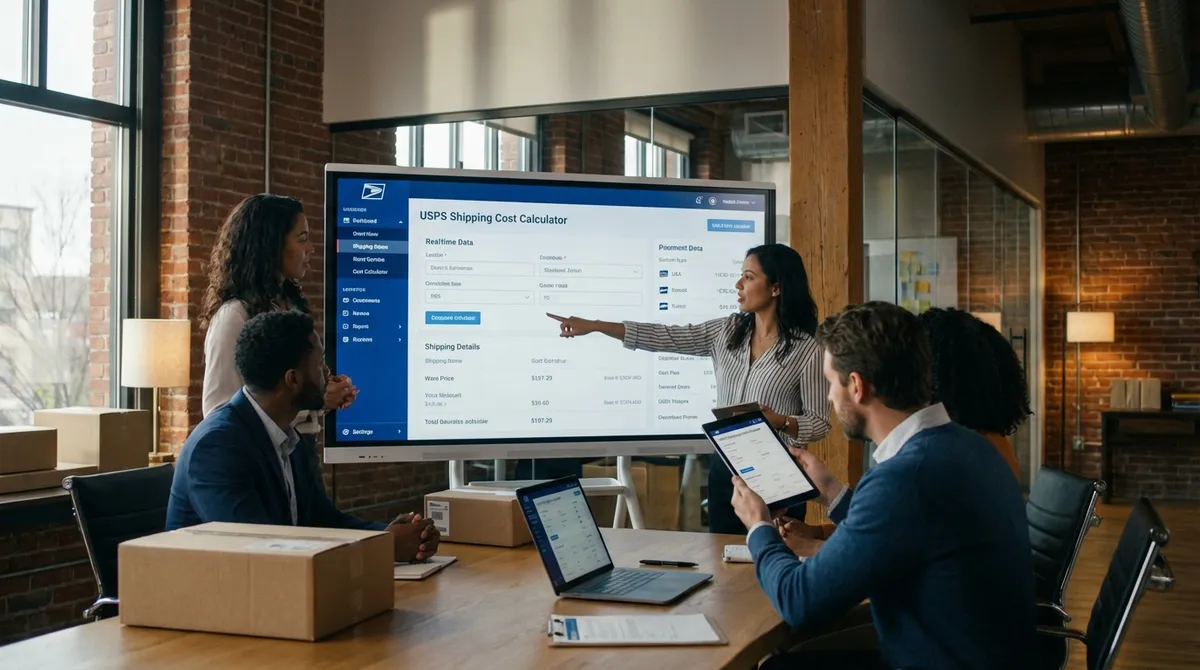
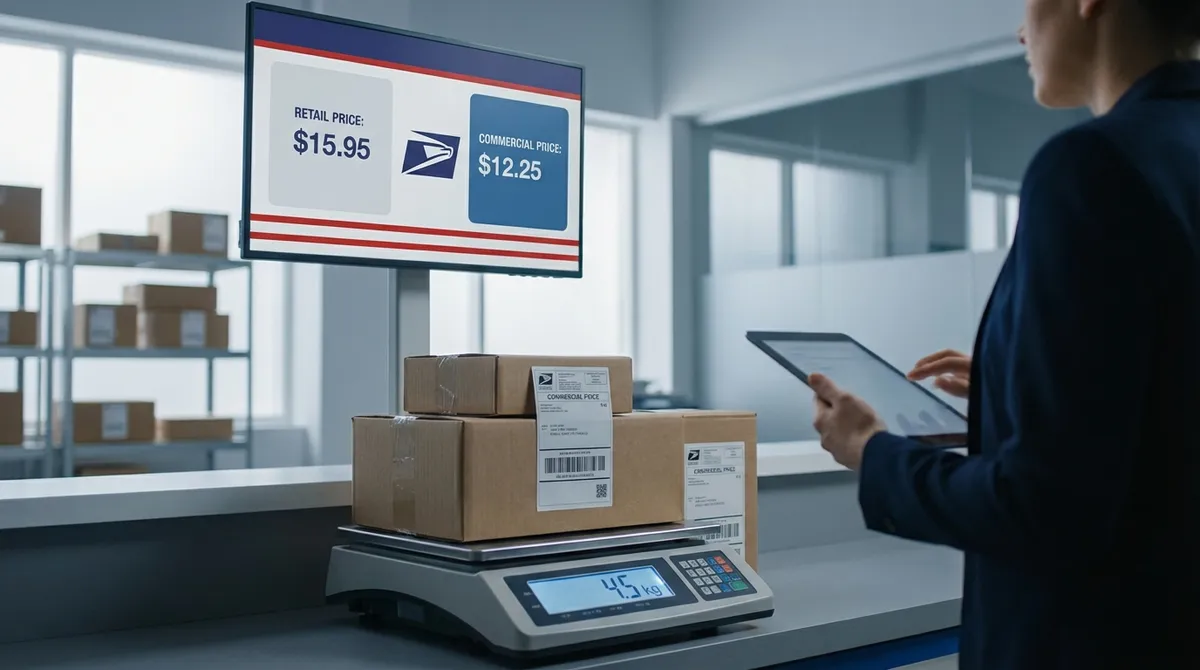
If you are still buying postage at the Post Office counter, you are likely overpaying by up to 89%. Our USPS retail vs commercial pricing calculator reveals the hidden savings available to businesses and individuals who print shipping labels online.
The United States Postal Service (USPS) operates with a two-tiered pricing structure that many casual shippers are unaware of. On one hand, you have Retail Pricing, which is the standard rate you pay when you walk into a physical Post Office location. On the other hand, there is Commercial Pricing (specifically Commercial Base and Commercial Plus), which offers significant discounts to high-volume shippers and users of online postage software. Understanding the difference between these two tiers is the single most effective way to reduce your shipping costs in 2025. Whether you are an e-commerce seller, a small business owner, or just sending a care package to a loved one, switching to commercial rates can save you hundreds or even thousands of dollars annually.
What Is the Difference Between Retail and Commercial Pricing?
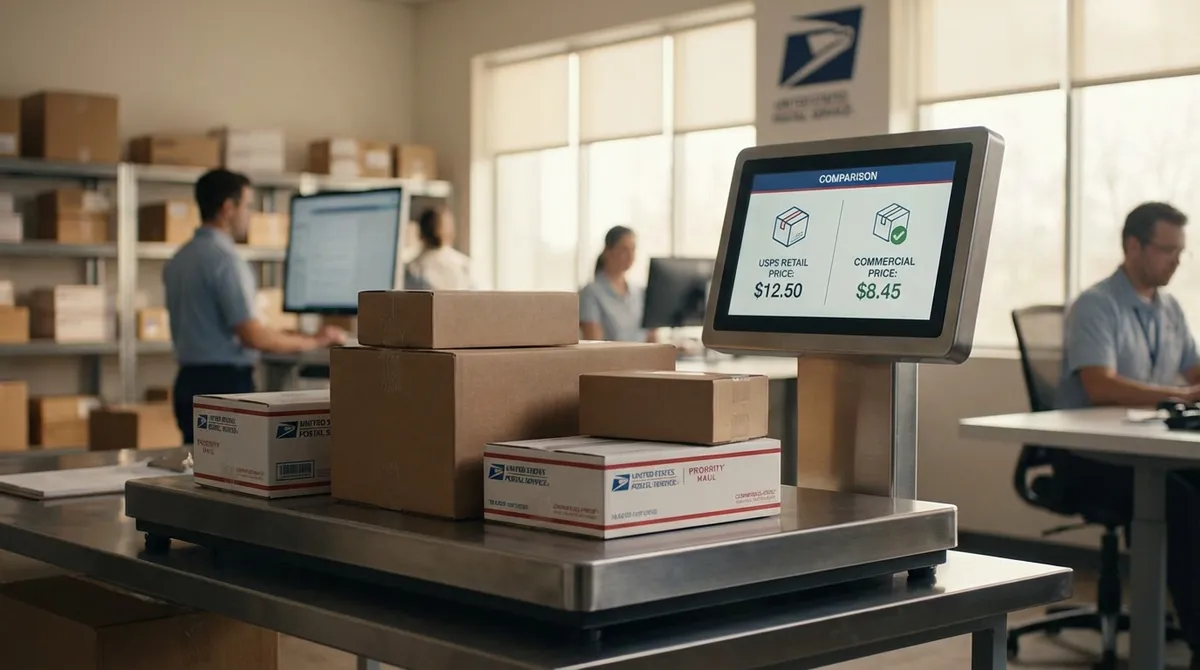
The distinction between retail and commercial pricing is not just about volume; it is about efficiency. The USPS incentivizes shippers to do the work of processing labels themselves, which reduces the workload on Post Office clerks. Here is a detailed breakdown of the two pricing models.
Retail Pricing (Post Office Rates)
Retail pricing is the "sticker price" of shipping. It is what you pay when you walk up to the counter at a local Post Office, weigh your package on their scale, and have the clerk print a label for you. This rate includes the cost of the clerk's labor, the physical infrastructure of the retail location, and the convenience of in-person service. For occasional shippers who send one or two packages a year, retail pricing is convenient, but it is the most expensive way to ship. There are no discounts applied, and you are paying the full market rate for the service.
Commercial Pricing (Online Rates)
Commercial Pricing (formerly known as Commercial Base Pricing) is a discounted rate structure originally designed for high-volume shippers. However, thanks to the rise of online shipping platforms, these rates are now accessible to almost everyone. By purchasing and printing your shipping labels online using software like Stamps.com, Pirate Ship, or ShippingEasy, you are effectively doing the data entry work for the USPS. In exchange, they pass the savings on to you. These discounts apply to almost every mail class, including USPS Ground Advantage, Priority Mail, and Priority Mail Express.
How Much Can You Save with Commercial Rates?
The savings potential is substantial and varies depending on the weight of your package, the distance it is traveling (zone), and the service you choose. In 2025, the gap between retail and commercial rates remains a key competitive advantage for smart shippers.
Savings on Priority Mail
Priority Mail is one of the most popular services for businesses due to its speed (1-3 days) and reliability. The savings here are dramatic. For example, a Medium Flat Rate Box purchased at the Post Office might cost around $19.30, whereas the commercial rate for the same box could be closer to $15.60. That is a savings of nearly $4.00 per package. If you ship just 10 boxes a week, that adds up to over $2,000 in savings per year. The discount is even more pronounced for heavier packages traveling to distant zones (like Zone 8 or 9), where commercial rates can be up to 40% lower than retail.
Savings on Ground Advantage
USPS Ground Advantage is the new standard for affordable ground shipping, replacing First-Class Package Service and Retail Ground. While already an economical choice, commercial rates make it even cheaper. For lightweight packages (under 1 lb), the savings might be $1.00 to $2.00 per package. However, for heavier items (up to 70 lbs), the commercial discount scales significantly. Using our USPS postage calculator, you can see that shipping a 5 lb package across the country via Ground Advantage is significantly cheaper when you print the label online versus buying it at the counter.
How to Access Commercial Pricing
You might think that accessing these "commercial" rates requires a business license or a minimum shipping volume, but that is a common misconception. In reality, anyone can access these rates with the right tools.
Use Online Shipping Software
The easiest way to get commercial pricing is to use a third-party shipping platform. These companies have negotiated bulk rates with the USPS and pass those savings on to their users. Popular options include:
- Pirate Ship: A free-to-use platform that offers Commercial Pricing with no monthly fees. Ideal for individuals and small businesses.
- Stamps.com: A robust solution for higher-volume shippers, offering integration with e-commerce stores.
- ShippingEasy: Great for marketing and inventory management alongside shipping.
All you need is a standard printer (or a thermal label printer) and a scale to weigh your packages. You enter the dimensions and weight, pay for the postage online, print the label, and simply drop the package off at the Post Office or schedule a free pickup.
E-commerce Integrations
If you sell on platforms like eBay, Etsy, or Shopify, you likely already have access to commercial rates. These marketplaces have built-in shipping tools that charge you the commercial rate (or close to it) rather than the retail rate. For example, buying a label through eBay's shipping flow automatically applies the commercial discount. Always check your platform's shipping settings to ensure you are taking advantage of these rates. You can verify this with our general shipping calculator to compare costs.
Strategic Shipping Tips for 2025
Beyond just switching to commercial pricing, there are other strategies you can employ to minimize your shipping costs further.
Invest in a Scale
Guessing the weight of your package is a recipe for disaster. If you underpay postage, your package could be returned or delivered with "Postage Due," which is a terrible customer experience. If you overpay, you are throwing money away. A simple digital shipping scale costs less than $30 and will pay for itself in saved postage very quickly. Accurate weighing ensures you pay exactly the right amount for the commercial rate.
Understand Cubic Pricing
For small, heavy packages (like a box of books or dense metal parts), "Cubic Pricing" can be a game-changer. This is a special tier of commercial pricing that is based on the size of the package rather than its weight. If your package is small (less than 0.5 cubic feet) but heavy (up to 20 lbs), cubic pricing can be cheaper than even the standard commercial weight-based rate. Most shipping software will automatically suggest cubic pricing if it is the cheaper option, provided you enter accurate dimensions.
Compare Carriers
While USPS is often the cheapest option for lightweight and residential deliveries, it is not always the winner for large or heavy boxes. Always compare rates with UPS and FedEx. For example, our UPS calculator and FedEx calculator can help you determine if a private carrier offers a better rate for large, heavy shipments going to commercial addresses.
Frequently Asked Questions
Here are some common questions about USPS retail and commercial pricing to help you navigate your shipping options.
FAQ: Retail vs Commercial Pricing
Conclusion
The verdict is clear: if you are paying retail prices at the Post Office, you are voluntarily paying more than necessary. The USPS retail vs commercial pricing gap is designed to reward efficiency. By taking the simple step of printing your labels at home or in the office, you unlock access to the same rates that major retailers use. Use our calculator above to estimate your potential savings for your next shipment, and start keeping more money in your pocket. For more insights on shipping costs, check out our USPS price calculator guide.
Disclaimer: Rates are subject to change by the USPS. The figures provided by this calculator are estimates based on the 2025 pricing structure and are for educational purposes only. Always verify the final postage cost with your shipping provider before purchasing.