Calculating USPS postage accurately requires understanding three key factors: mail class, destination zone, and applicable surcharges. Our USPS Price Calculator simplifies this process, helping you estimate 2025 shipping costs for Ground Advantage, Priority Mail, and Priority Mail Express. Whether you're shipping a small letter or a large parcel, knowing how class, zone, and surcharges interact can save you money and prevent unexpected fees at the post office.

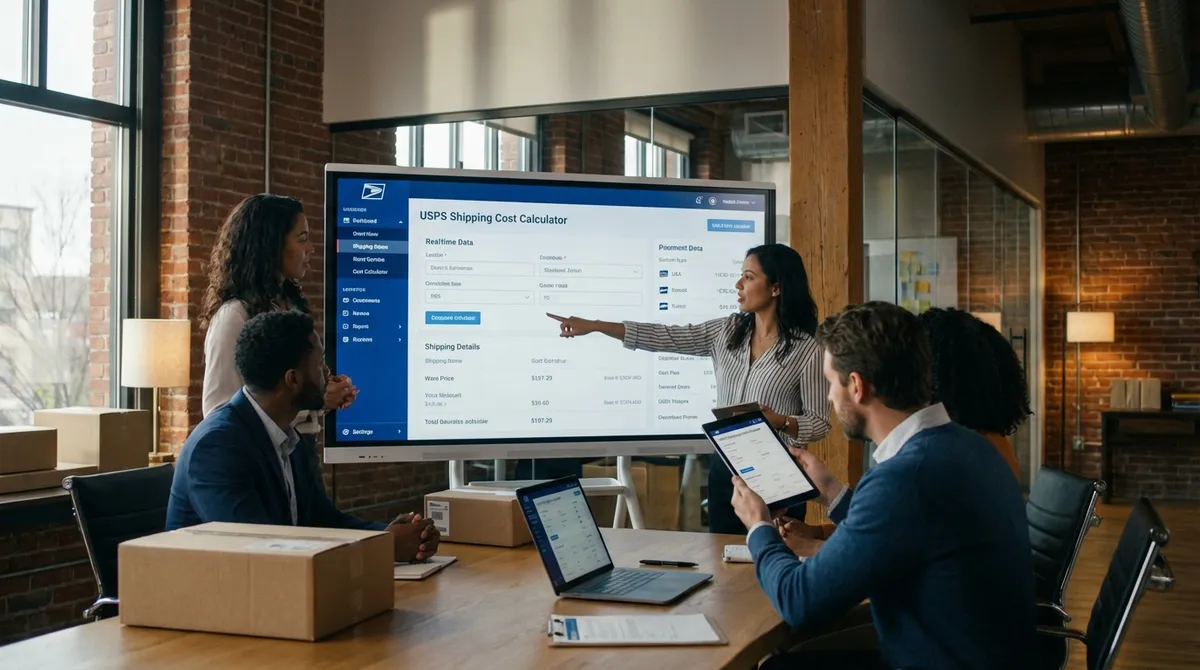
How to Use This Calculator
Our tool is designed to provide quick estimates for the most common USPS services. Follow these steps to get your shipping cost estimate:
- Select Mail Class: Choose between USPS Ground Advantage™ (best for economy), Priority Mail® (fast delivery), or Priority Mail Express® (overnight).
- Choose Destination Zone: Select the zone (1-9) that corresponds to the distance your package is traveling. Zone 1 is local, while Zone 9 represents far-off territories.
- Enter Weight: Input the weight of your package in pounds and ounces. Accurate weight is crucial for correct pricing.
- Input Dimensions: Enter the Length, Width, and Height in inches. This allows the calculator to check for dimensional (DIM) weight and oversize surcharges.
- Check Surcharges: If your package is non-machinable (e.g., rigid, uneven) or has a non-standard length, select the appropriate checkboxes.
Pro Tip: Measure Twice!
USPS is strict about dimensions. A package that is just 0.5 inches over a limit can trigger a significant surcharge. Always round up to the nearest inch when measuring to ensure your estimate covers potential costs.
Understanding USPS Zones
USPS pricing is heavily dependent on "Zones," which measure the distance between the origin and destination zip codes. The further the package travels, the higher the zone number and the cost.
- Zone 1: Non-local destinations within 50 miles.
- Zone 2: 51 to 150 miles.
- Zone 3: 151 to 300 miles.
- Zone 4: 301 to 600 miles.
- Zone 5: 601 to 1000 miles.
- Zone 6: 1001 to 1400 miles.
- Zone 7: 1401 to 1800 miles.
- Zone 8: 1801 miles or more.
- Zone 9: Freely Associated States (e.g., Guam, Palau).
You can find the exact zone for your shipment using the official USPS Zone Chart.
2025 Surcharges Explained
In addition to the base rate, USPS applies surcharges for packages that are large, heavy, or difficult to process. These fees can significantly increase your shipping cost if you aren't prepared.
Length Fees
Packages that exceed certain length thresholds incur additional fees. For 2025, a package longer than 22 inches but less than 30 inches may see a surcharge of around $4.00. If the length exceeds 30 inches, the fee jumps to $15.00. It's often cheaper to repack items into a smaller, wider box than a long, thin one.
Dimensional (DIM) Weight
For packages larger than 1 cubic foot (1,728 cubic inches), USPS may charge based on "Dimensional Weight" rather than actual weight. This is calculated as (Length × Width × Height) / 166. If the DIM weight is higher than the actual weight, you pay the DIM weight price. Our calculator automatically checks for this when you enter dimensions.
Non-Standard Volume
Extremely large packages that exceed 2 cubic feet in volume are subject to a substantial surcharge, often $25.00 or more. This is common for shipping items like pillows, large toys, or assembled furniture.
Comparing Mail Classes
Choosing the right mail class is a balance between speed and cost. Here is a quick comparison to help you decide:
| Service | Delivery Speed | Best For |
|---|---|---|
| Ground Advantage | 2-5 Business Days | Economy shipping, packages under 70 lbs. |
| Priority Mail | 1-3 Business Days | Faster delivery, includes insurance. |
| Priority Mail Express | Next-Day to 2-Day | Urgent, time-sensitive shipments. |
Detailed Guide: How to Measure Package Dimensions
Accurate measurement is the foundation of cost-effective shipping. USPS uses automated equipment to scan packages, and discrepancies between your stated dimensions and the actual size can lead to "revenue assurance" adjustments—meaning they will charge your account for the difference later. Here is how to measure like a pro:
1. Length, Width, and Height
Always measure the longest side of the package as the Length. The other two dimensions are Width and Height. It doesn't matter which is which, as the formula L x W x H yields the same volume. However, identifying the length correctly is crucial for determining length-based surcharges (over 22" or 30").
2. Round Up to the Nearest Inch
USPS rules state that you must round up to the nearest whole inch. If your box measures 12.2 inches, you must enter 13 inches. If it is exactly on the half-inch (e.g., 12.5), round up to 13. Never round down, as this is considered under-declaring and can result in penalties or returned packages.
3. Account for Bulges
If you are shipping a soft poly mailer or an overstuffed box, measure the thickest point. A bag might be flat when empty, but once filled with a sweater, it could be 4-5 inches high. This "bulge" counts towards the dimensions and can trigger DIM weight pricing.
Strategies for Reducing Shipping Costs
Shipping can be one of the biggest expenses for small businesses. Implementing a few strategic changes can lower your average cost per package significantly.
Use "Cubic" Pricing for Small, Heavy Items
USPS offers a "Cubic" pricing tier for Priority Mail and Ground Advantage packages that are small but heavy (up to 20 lbs). This rate is based on the volume of the package rather than its weight. If you ship dense items like books, metal parts, or liquids, using a smaller box can qualify you for cubic rates that are often cheaper than weight-based rates.
Leverage Flat Rate Boxes
Priority Mail Flat Rate® boxes are a powerful tool for heavy items traveling long distances (Zones 5-9). If it fits, it ships for one low price, regardless of weight (up to 70 lbs). However, for lightweight items traveling to nearby zones (Zones 1-4), Flat Rate boxes are often more expensive than using your own packaging. Always compare the rates using our calculator.
Avoid Surcharges with Smart Packaging
As mentioned earlier, surcharges for length (>22") and volume (>2 cu ft) are steep. If you have an item that is 23 inches long, see if it can be disassembled or positioned diagonally in a wider, shorter box (e.g., 20" x 12" x 12"). Keeping the longest side under 22 inches saves you $4.00 instantly.
USPS vs. UPS vs. FedEx: When to Choose Which?
While USPS is often the most economical choice for lightweight residential delivery, it's not always the winner. Here is a quick breakdown of when to use each carrier:
- USPS: Best for packages under 5 lbs, residential deliveries (no residential surcharge on Ground Advantage), and shipping to PO Boxes or military addresses (APO/FPO).
- UPS: Often cheaper for heavy packages (>10 lbs) and large boxes. UPS Ground is very competitive for commercial addresses and offers guaranteed day-definite delivery.
- FedEx: Similar to UPS, FedEx Ground is great for heavier items. FedEx One Rate is a strong competitor to USPS Flat Rate for time-sensitive shipments.
For a direct comparison, use our UPS Shipping Calculator and FedEx Shipping Calculator to see rates side-by-side.
Understanding Insurance and Liability
USPS Ground Advantage and Priority Mail both come with $100 of built-in insurance. This covers loss or damage during transit. However, filing a claim requires proof of value and proof of damage.
If you are shipping high-value items (over $100), you should purchase additional insurance. The cost is relatively low compared to the risk of losing a $500 item. Priority Mail Express includes up to $100 of insurance as well, with options to purchase more.
Note: Insurance does not cover "porch piracy" (theft after delivery). If you are concerned about theft, require a Signature Confirmation. This costs extra (approx. $3-4) but ensures the package is handed to a person, not left on a doorstep.
Frequently Asked Questions
Related Tools
If you need to calculate costs for other carriers or specific scenarios, check out our other calculators: