Whether you're tracking investment growth, calculating a salary raise, or analyzing price markups, understanding how to calculate percentage increase is a fundamental skill. Our Percentage Increase Calculator makes this process instant and error-free, helping you determine the exact growth rate from a baseline value to a new value.

What is Percentage Increase?
Percentage increase is a measure of how much a value has grown relative to its original starting point, expressed as a fraction of 100. It is one of the most common ways to quantify growth, inflation, or profit in both finance and everyday life. Unlike simple addition, which tells you the absolute difference (e.g., "$50 more"), percentage increase tells you the relative difference (e.g., "50% more"), which provides much more context.
For example, a $10 increase on a $20 item is massive (50%), whereas a $10 increase on a $1,000 item is negligible (1%). Percentage increase standardizes these changes so they can be easily compared. This concept is crucial in fields ranging from retail to macroeconomics, allowing for standardized comparisons across different scales and currencies.
How to Calculate Percentage Increase
Calculating percentage increase involves finding the difference between the new value and the original value, and then dividing that difference by the original value. Finally, you multiply by 100 to get the percentage. This process essentially asks, "What portion of the original value does the increase represent?"
The Percentage Increase Formula
Percentage Increase = ((New Value - Original Value) / Original Value) × 100
Step-by-Step Calculation Example
Let's say your rent increased from $1,500 (Original Value) to $1,650 (New Value). Here is how you would calculate the percentage increase:
- Find the difference: Subtract the original value from the new value.
1650 - 1500 = 150 - Divide by the original value: Take the difference and divide it by the starting amount.
150 / 1500 = 0.10 - Convert to percentage: Multiply the result by 100.
0.10 × 100 = 10%
So, your rent has increased by exactly 10%. This means for every $100 you were paying before, you are now paying an additional $10.
Common Applications of Percentage Increase
You will encounter percentage increase calculations in various aspects of life. Here are some of the most common scenarios where this calculator is essential.
1. Salary Raises
If you receive a raise, you want to know the percentage to compare it against inflation or industry standards. If your salary goes from $50,000 to $55,000, that is a 10% increase. You can use our Pay Raise Calculator for more specific payroll scenarios. Understanding your raise in percentage terms helps you negotiate better and understand your real purchasing power changes.
2. Investment Growth
Investors use percentage increase to track the performance of their portfolio. If you buy a stock at $100 and it goes to $120, you have a 20% return. For more complex investment scenarios involving compound interest, check out our Investment Calculator. Tracking percentage growth allows you to compare the performance of different assets, regardless of the amount invested in each.
3. Inflation and Price Changes
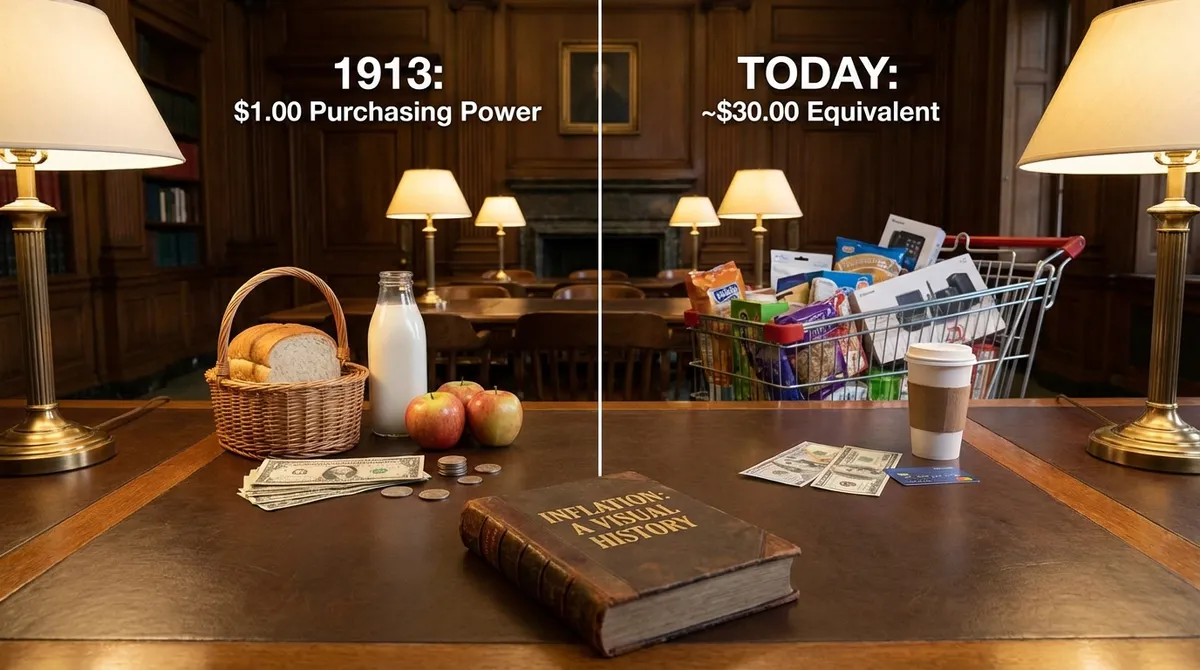
Inflation is essentially the percentage increase in the price of goods and services over time. If a gallon of milk cost $3.00 last year and $3.30 this year, that is a 10% inflation rate for that item. To track broader economic trends, use our Inflation Calculator. Keeping an eye on inflation rates helps you understand the changing value of your money.
4. Retail Markups
Businesses use percentage increase to determine markups. If a product costs $20 to make and is sold for $30, the markup is calculated based on the cost price. This ensures that the business covers its costs and generates a profit.
5. Population Growth
Demographers and city planners use percentage increase to track population changes. If a city of 100,000 grows to 105,000, that is a 5% growth rate. This data is vital for planning infrastructure, schools, and hospitals. You can explore similar concepts with our Growth Rate Calculator.
Percentage Increase vs. Percentage Change
While often used interchangeably, "percentage increase" specifically refers to a positive change where the new value is higher than the original. "Percentage change" is a broader term that can refer to both increases (positive) and decreases (negative).
If the new value is lower than the original, the result will be negative, indicating a percentage decrease. Our tool handles both, but if you are specifically looking to compare two distinct values to see how they differ regardless of direction, you might find our Percentage Difference Calculator more useful.
Percentage Points vs. Percentage
A common source of confusion is the difference between "percentage" and "percentage points". This distinction is critical when discussing interest rates or statistics.
Percentage Point: The arithmetic difference between two percentages. For example, if a tax rate goes from 10% to 12%, it has increased by 2 percentage points.
Percentage: The relative change. In the same example (10% to 12%), the tax rate has actually increased by 20% ((12-10)/10 * 100).
Confusing these two can lead to massive misunderstandings. A "1% increase" in an interest rate of 5% would result in 5.05%, whereas a "1 percentage point increase" would result in 6%.
How to Calculate Percentage Increase in Excel
If you are working with large datasets, you might want to calculate percentage increase in Excel or Google Sheets. Here is the formula you need:
Assuming your Original Value is in cell A1 and your New Value is in cell B1, enter the following formula in cell C1:
After entering the formula, make sure to format the cell as a "Percentage" to see the result correctly (e.g., 10% instead of 0.1). This formula works exactly the same way in Google Sheets and Apple Numbers.
Why the "Original Value" Matters
The most common mistake in calculating percentage increase is dividing by the new value instead of the original value. This gives you the profit margin or a different ratio, not the growth rate.
Rule of Thumb: Always divide by the number that represents the "start" or "baseline" of the change.
- Correct: (Increase / Original) × 100
- Incorrect: (Increase / New) × 100
Handling Negative Numbers and Decreases
Calculating percentages when one or both numbers are negative requires careful interpretation.
- Positive to Positive (e.g., 50 to 75): Standard calculation. (25/50) = 50% increase.
- Positive to Negative (e.g., 50 to -25): This represents a decrease of more than 100%. The change is -75. (-75/50) = -150% change.
- Negative to Negative (e.g., -50 to -25): The value has actually increased (become less negative). The change is +25. (25/|-50|) = 50% increase. *Note: Using the absolute value of the denominator is a common convention to maintain the directionality of "improvement" or "worsening," though mathematicians may debate the formal definition.*
- Negative to Positive (e.g., -50 to 25): The value has increased by 75 units. (75/|-50|) = 150% increase.
The standard formula uses the absolute value of the denominator to ensure the sign of the result correctly reflects the direction of change relative to the magnitude of the starting point.
Percentage Increase in Geometry
Percentages behave surprisingly in geometry. If you increase the length of a square's side by a certain percentage, the area doesn't increase by that same percentage—it increases by much more.
Example:
Take a square with side length 10. Area = 100.
Increase the side length by 50% to 15.
New Area = 15 × 15 = 225.
The side length increased by 50%, but the area increased by 125% ((225-100)/100).
This is because area scales with the square of the linear dimension. For volume, it scales with the cube. A 50% increase in the dimensions of a cube results in a 237.5% increase in volume! ((1.5)³ = 3.375).
Compound Percentage Increase
Percentages are not additive. If an investment grows by 10% one year and 10% the next year, the total growth over two years is not 20%.
Year 1: $100 grows 10% to $110.
Year 2: $110 grows 10% to $121.
Total growth is $21, which is a 21% increase, not 20%. This effect, known as compounding, becomes incredibly powerful over long periods. It is the fundamental force behind wealth accumulation in the stock market and the burden of high-interest debt.
For more on mathematical concepts regarding ratios and changes, resources like Investopedia provide excellent deep dives into financial mathematics.
Frequently Asked Questions
Conclusion
Mastering the percentage increase calculation empowers you to make better financial decisions, whether you are negotiating a salary, analyzing stock market trends, or simply trying to understand price changes at the grocery store. Use this calculator whenever you need a quick, accurate figure to measure growth.
For further reading on how percentages are used in economic statistics, the Bureau of Labor Statistics offers detailed insights into how inflation and price changes are tracked officially.